
 HOME
HOME Services
 Residential
 Commercial
 Products
 ABOUT
ABOUT Resources
 Contact
 813-777-8272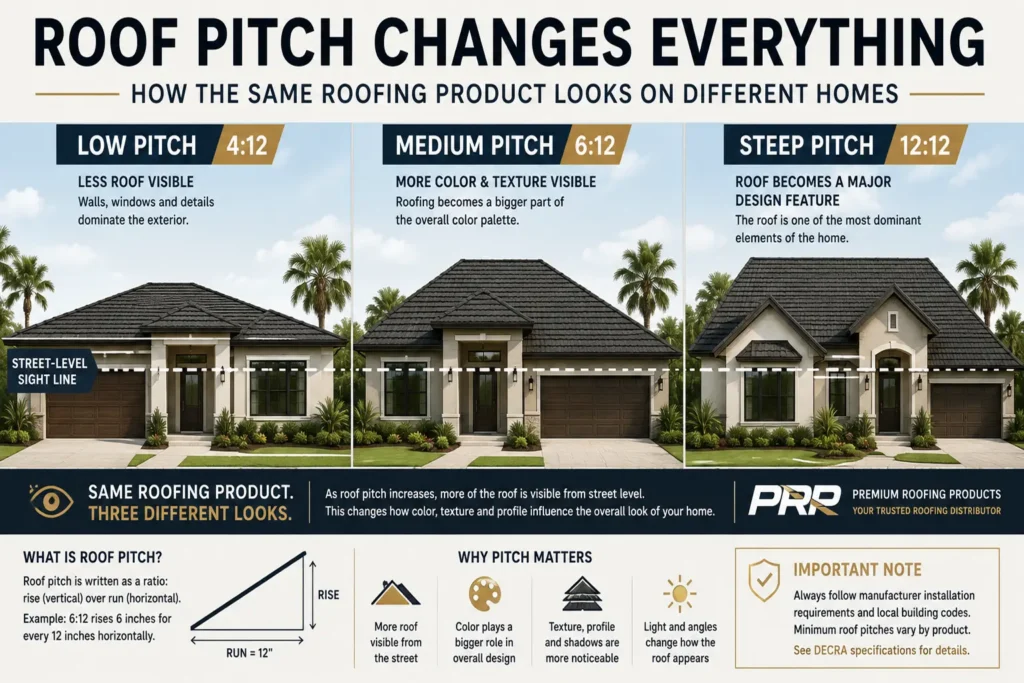
Roof Pitch Changes Everything: How the Same Roofing Product Looks on Different Homes
Two homes can use the same roofing material, the same profile and even the same color—and still look completely different from the street.
One of the biggest reasons is roof pitch.
The angle of a roof changes how much roofing surface you can actually see, how strongly the roof color affects the home’s exterior, and how visible details such as stone granules, shake patterns, tile curves and shadow lines become.
A relatively low-pitch roof may almost disappear behind the front elevation of the house. A steep roof can become one of the most dominant architectural features on the entire property.
At Premium Roofing Products (PRP), a Florida roofing distributor specializing in premium metal and stone-coated metal roofing, we help contractors, builders and homeowners compare roofing profiles not only by color and style, but by how those products will actually look once installed.
Here’s why roof pitch changes so much.
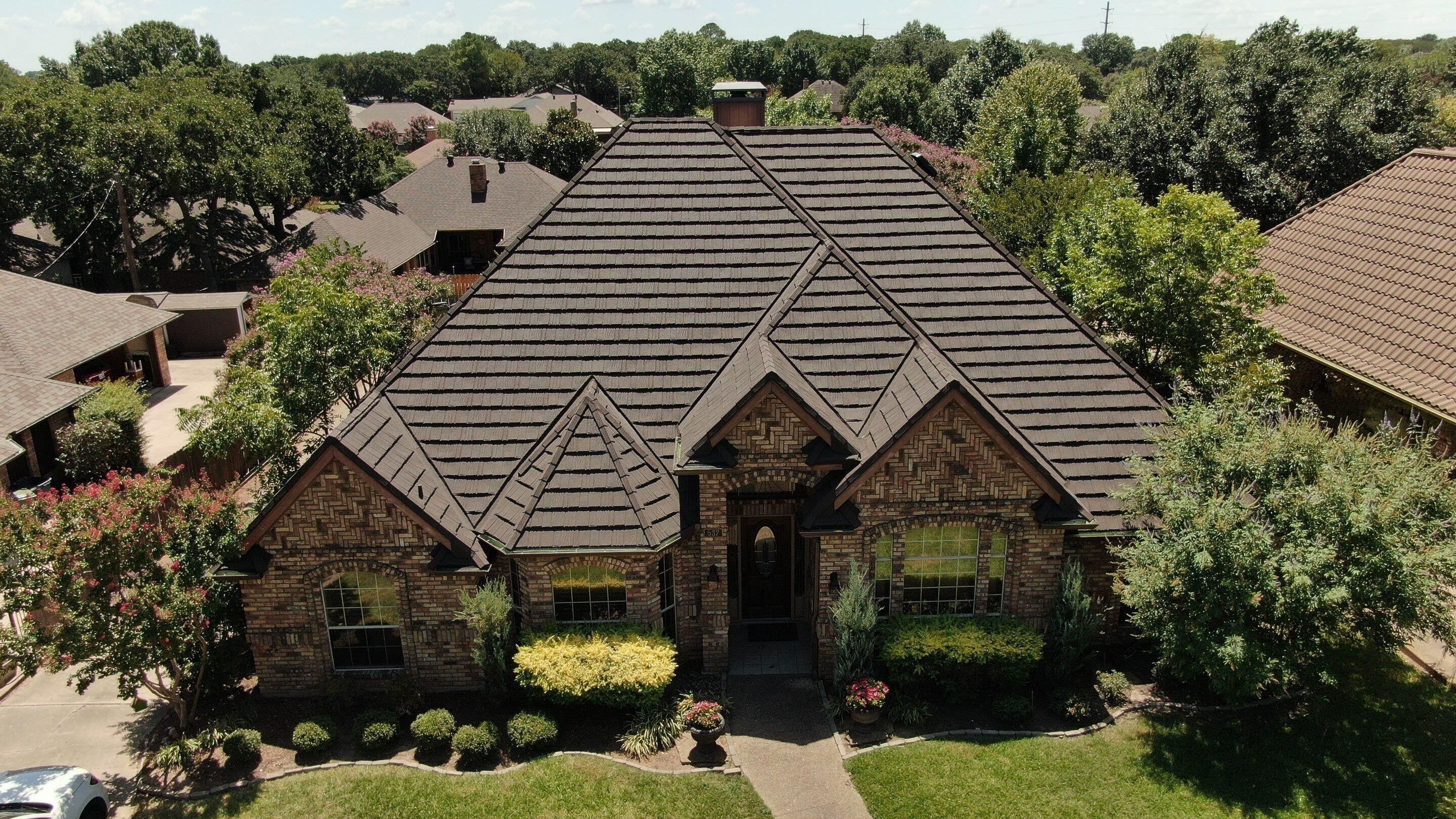
Photo courtesy of DECRA Metal Roofing. Click image to visit DECRA.
What Is Roof Pitch?
Roof pitch describes how steep a roof is.
In the United States, it is commonly written as a ratio such as 4:12, 6:12 or 12:12.
The first number describes how many inches the roof rises vertically for every 12 inches it travels horizontally.
Simple Roof Pitch Examples
4:12 Pitch — the roof rises 4 inches for every 12 inches of horizontal run.
6:12 Pitch — the roof rises 6 inches for every 12 inches of horizontal run.
12:12 Pitch — the roof rises 12 inches for every 12 inches of horizontal run.
As that rise increases, the roof becomes steeper.
From a design standpoint, that changes how much of the roof faces the viewer.
The important design idea:
The steeper the roof, the more roofing surface is generally visible from normal ground-level viewing positions.
Low Pitch: The Roof Often Plays a Smaller Visual Role
On a lower-pitch home, much of the roofing surface may angle away from someone standing at street level.
That means the exterior walls, windows, doors, columns, stonework and landscaping can visually dominate the property while the roof becomes more of a supporting element.
The roofing color still matters, but less of that color may be visible from the curb.
This can be especially noticeable on one-story homes with wide overhangs.
Typical Low-Pitch Visual Effect
- Less roof surface visible from the street
- Siding and stucco become more visually dominant
- Roof texture may be harder to appreciate from a distance
- Roof color can act more like an accent than a primary exterior color
Medium Pitch: Roofing Becomes Part of the Main Exterior Palette
At a moderate pitch, the roof usually becomes much more visible.
This is where roofing color and texture begin playing a much larger role in the home’s overall appearance.
A charcoal roof against white stucco, Weathered Timber over brick or a warm clay-colored tile profile can occupy a substantial portion of what someone sees from the street.
The roof is no longer simply sitting on top of the house.
It becomes part of the architecture.
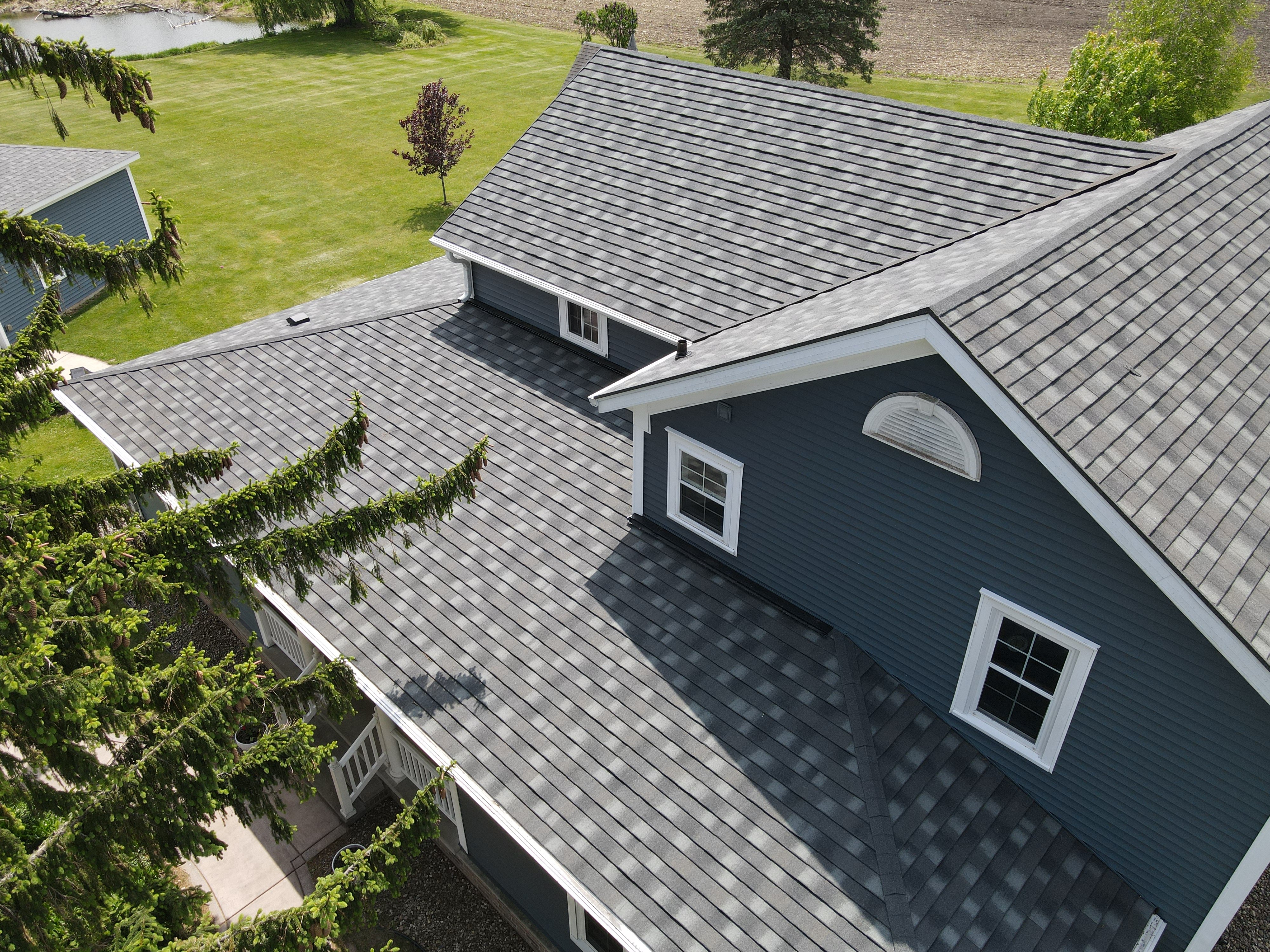
Photo courtesy of DECRA Metal Roofing. Click image to visit DECRA.
Steep Pitch: The Roof Can Become the Main Design Feature
On a steeply pitched home, the roof can occupy an enormous portion of the street-facing elevation.
That means roofing color, texture and profile can influence the home’s appearance just as much as the siding, stucco, brick or stone.
This is where highly dimensional roofing profiles can really stand out.
Deep shake patterns, tile curves, thick-looking shingle edges and blended stone colors have more visible surface area to work with.
A steep roof can almost act like another exterior wall.
On a steep roof:
A roofing color that looks subtle on a small sample may become a major part of the home’s overall color scheme once it covers a large, highly visible roof plane.
Same Color. Very Different Impact.
Imagine three white homes using exactly the same charcoal stone-coated roof.
4:12 Roof
Only a moderate amount of charcoal may be visible from the curb. White siding or stucco remains visually dominant.
6:12 Roof
The charcoal roof becomes a substantial part of the exterior palette and creates stronger contrast with the walls.
12:12 Roof
The charcoal roofing may dominate the upper half of the home. Roof color becomes one of the first things you notice.
Roof Pitch Changes How Texture Looks Too
Color isn’t the only thing affected by pitch.
Texture is also easier to see when more roofing surface faces the viewer.
Stone-coated metal roofing products are especially interesting because their surfaces contain both physical profile depth and stone granule texture.
DECRA currently offers profiles designed to reproduce Old-World tile, Mediterranean tile, architectural shingles and hand-split shake. :contentReference[oaicite:1]{index=1}
When the roof becomes steeper, those shapes can become more visually prominent.
Tile Profiles Change Dramatically With Pitch
Consider a barrel-style tile profile such as DECRA Villa Tile.
DECRA describes Villa Tile as replicating the dimension and detail of Old-World Italian clay tile. :contentReference[oaicite:2]{index=2}
On a relatively low roof, you may primarily notice the bottom edges of the tile pattern.
On a steeper roof, more of each curve becomes visible.
That can make the roof appear deeper and more dimensional.
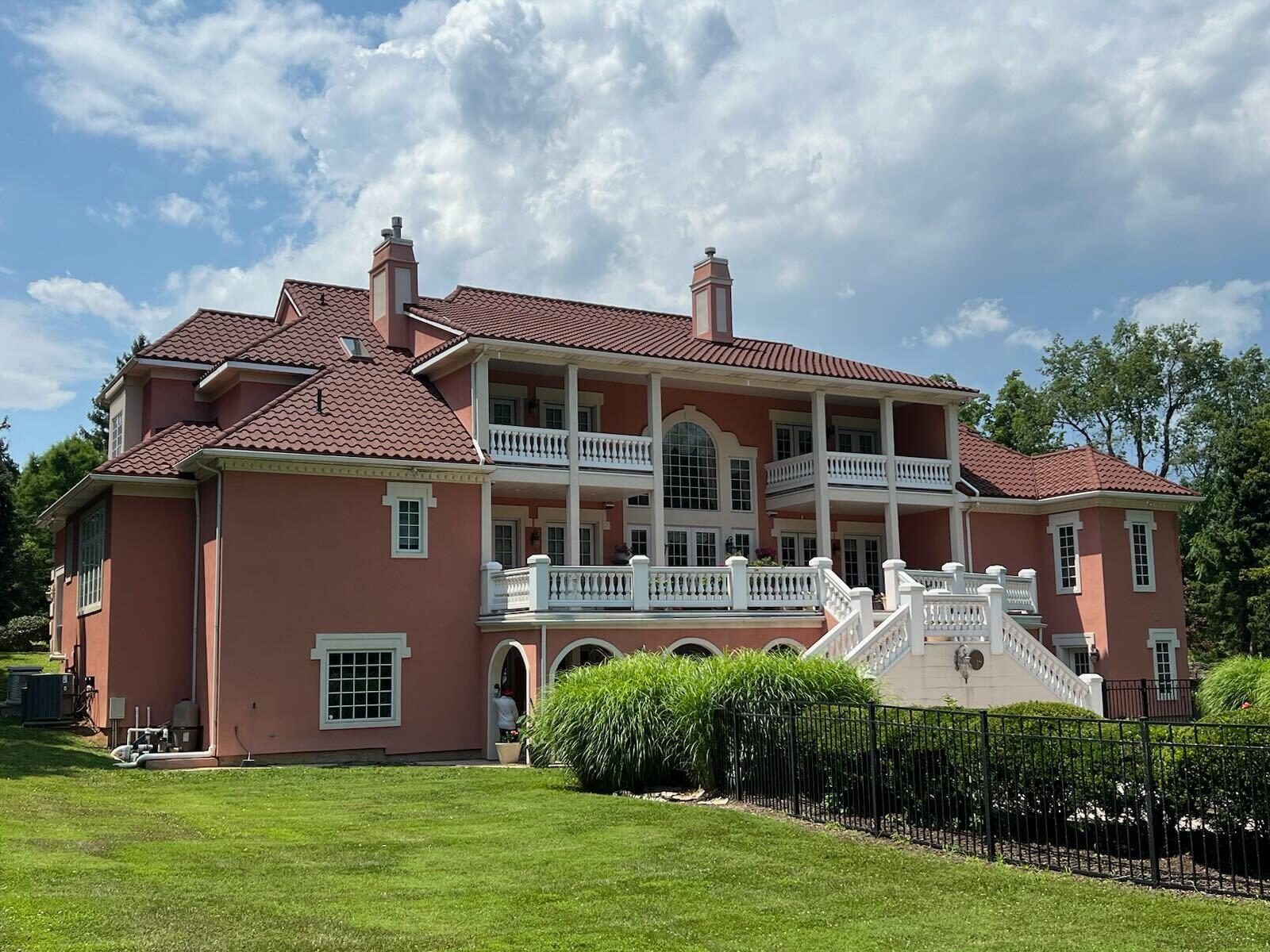
Photo courtesy of DECRA Metal Roofing. Click image to visit DECRA.
Shake Profiles Use Shadow to Create Depth
Shake-style roofing depends heavily on irregular lines, raised surfaces and shadows.
On a roof where only a small amount of surface is visible, that detail can be subtle.
On a steeper roof, the viewer sees more rows of roofing at once.
That allows the repeated pattern and shadow lines to play a much larger role in the design.
Photo courtesy of DECRA Metal Roofing. Click image to visit DECRA.
Shingle Profiles Can Look Heavier on Steeper Roofs
The same idea applies to dimensional shingle profiles.
DECRA Shingle XD is specifically designed with thick-cut edges and pronounced shadow lines intended to reproduce the appearance of heavyweight architectural shingles. :contentReference[oaicite:3]{index=3}
As more rows become visible, those shadow lines contribute more strongly to the overall appearance.
On a steep roof, a dark shingle profile can create a very substantial visual presence.
Pitch Also Changes How Light Hits the Roof
Roof pitch changes the angle at which sunlight reaches the roofing surface.
That can affect how bright or dark a roof appears throughout the day.
A roof plane facing more directly toward the sun may reveal more highlights in the stone coating.
Another plane on the same home may appear darker because it remains partially shaded.
This is particularly noticeable with blended stone-coated roofing colors because the surface contains multiple granule tones rather than one perfectly uniform painted color.
Why the Same Roofing Color Can Look Different on Two Houses
Even when two homes use the exact same roofing product, several architectural factors can make the roof appear different.
- Roof pitch
- Direction the roof faces
- Number and size of roof planes
- Roof height
- One-story vs. two-story architecture
- Viewer distance from the house
- Surrounding trees and shade
- Exterior siding or stucco color
- Brick and stone accents
- Amount of visible roof from street level
That’s one reason completed-home photographs are more helpful than looking only at a product swatch.
A One-Story Home and Two-Story Home Can Show the Same Roof Differently
Pitch isn’t the only factor controlling visibility.
The height of the building also changes the viewing angle.
On a low one-story home, someone standing nearby may see relatively little of a shallow roof.
Move farther back and more of the roof may become visible.
On a two-story home, the roof is physically higher, which changes the angle between the viewer and the roof surface.
That means two identical pitches can still look different depending on building height and viewing distance.
Roof Complexity Changes the Effect Too
Some homes have one or two simple roof planes.
Others contain:
- Multiple gables
- Hips
- Dormers
- Valleys
- Turrets
- Porch roofs
- Different roof elevations
As the number of roof planes increases, roofing texture and color can become more visually complex.
A stone-coated roof can look dramatically different on a simple ranch home than the same product does on a heavily articulated Mediterranean or Craftsman home.
Minimum Roof Pitch Matters Too
Roof pitch isn’t only an aesthetic consideration.
Each roofing system has installation requirements that need to be followed.
According to DECRA’s current specifications, its major profiles have the following minimum roof pitches:
| DECRA Profile | Published Minimum Roof Pitch |
|---|---|
| DECRA Villa Tile | 3:12 |
| DECRA Tile | 3:12 |
| DECRA Shake XD | 3:12 |
| DECRA Shake | 3:12 |
| DECRA Shingle XD | 4:12 |
DECRA’s specifications identify Villa Tile, Tile, Shake XD and Shake with 3:12 minimum pitches and Shingle XD with a 4:12 minimum pitch. :contentReference[oaicite:4]{index=4}
Important:
These manufacturer minimums are technical installation requirements, not recommendations that every product should be used at the minimum slope on every building. Contractors should follow current manufacturer instructions, applicable codes and project-specific requirements.
Don’t Choose a Roof From a Flat Sample Alone
A physical roofing sample is extremely helpful for evaluating color and texture.
But there’s one problem.
Most people examine the sample while holding it almost flat in their hands.
That’s not how it will appear on the house.
A roof sample viewed horizontally can look substantially different when installed at 4:12, 6:12, 8:12 or an even steeper pitch.
The installation angle changes:
- How much surface you can see
- How light reaches the granules
- How strongly shadows appear
- How visible the roofing profile becomes
Look at Completed Homes With Similar Architecture
One of the best ways to evaluate a roofing product is to find completed installations on homes with architecture similar to yours.
Don’t look only at roofing color.
Look for homes with a similar:
- Roof pitch
- Number of stories
- Exterior color
- Roof complexity
- Architectural style
DECRA’s online roofing gallery can be filtered by profiles such as Villa Tile, Tile, Shingle XD, Shake XD and Shake, making it useful for comparing how the same roofing family appears on different structures. :contentReference[oaicite:5]{index=5}
Low, Medium and Steep: A Simple Visual Guide
| Roof Pitch | General Street-Level Appearance | Design Impact |
|---|---|---|
| Lower Pitch | Less roof surface usually visible | Walls, trim and landscaping may dominate |
| Medium Pitch | Roof becomes clearly visible | Roof color and profile become major exterior elements |
| Steep Pitch | Large roof areas can face the viewer | Roof may become one of the home’s dominant design features |
Which Roofing Profiles Benefit From More Visibility?
There isn’t one correct answer because architectural style should drive the decision.
However, highly dimensional products naturally have more detail to display when the roof is highly visible.
DECRA describes:
- Villa Tile as replicating detailed Old-World Italian clay tile.
- Tile as reproducing scalloped Mediterranean tile.
- Shingle XD as providing pronounced shadow lines associated with architectural shingles.
- Shake XD as reproducing the architectural character of hand-split wood shake.
- Shake as recreating the appearance of cedar shake.
Those visual characteristics can become increasingly noticeable as more roof surface is exposed to view. :contentReference[oaicite:6]{index=6}
Roof Color Becomes More Important as Roof Visibility Increases
Imagine choosing a roofing color from a small sample.
That color may look like a minor accent while you’re holding it.
Now imagine that same color covering several thousand square feet on a steeply pitched roof.
It can become one of the largest blocks of color on the entire property.
This is why roof pitch should be considered together with:
- Siding
- Stucco
- Brick
- Stone
- Window frames
- Trim
- Garage doors
- Landscaping
See How Different DECRA Profiles Look on Real Homes
DECRA maintains an extensive gallery of completed installations featuring Villa Tile, Tile, Shingle XD, Shake XD and Shake in a wide range of colors and architectural styles. :contentReference[oaicite:7]{index=7}
When browsing the gallery, pay attention to more than just the roofing color.
Look at how much roof surface is actually visible.
That one detail can explain why the exact same product may look subtle on one project and dramatic on another.
Compare Roofing Profiles With Premium Roofing Products
Premium Roofing Products (PRP) is a Florida roofing distributor specializing in stone-coated metal roofing and other premium roofing systems.
PRP can help contractors, builders and homeowners compare DECRA profiles, colors, physical samples and technical product information for their roofing projects.
When evaluating a roofing product, don’t consider color and profile alone. Think about how much of that roof will actually be visible once it is installed on the building.
The Same Roof Can Look Completely Different
That’s the key takeaway.
Roof pitch changes the relationship between the roof and the rest of the house.
On a lower-pitch home, roofing may quietly frame the architecture.
On a medium-pitch home, it becomes a major part of the exterior color palette.
On a steep-pitch home, the roof itself can become the dominant architectural feature.
Same roofing product. Same color. Completely different visual impact.
Photo Credit:
Roofing photographs featured in this article are hosted by and courtesy of DECRA Roofing Systems. Clicking a DECRA photograph will open a DECRA resource in a new browser tab.
Sources & Additional Resources:
|
|
|
|