
 HOME
HOME Services
 Residential
 Commercial
 Products
 ABOUT
ABOUT Resources
 Contact
 813-777-8272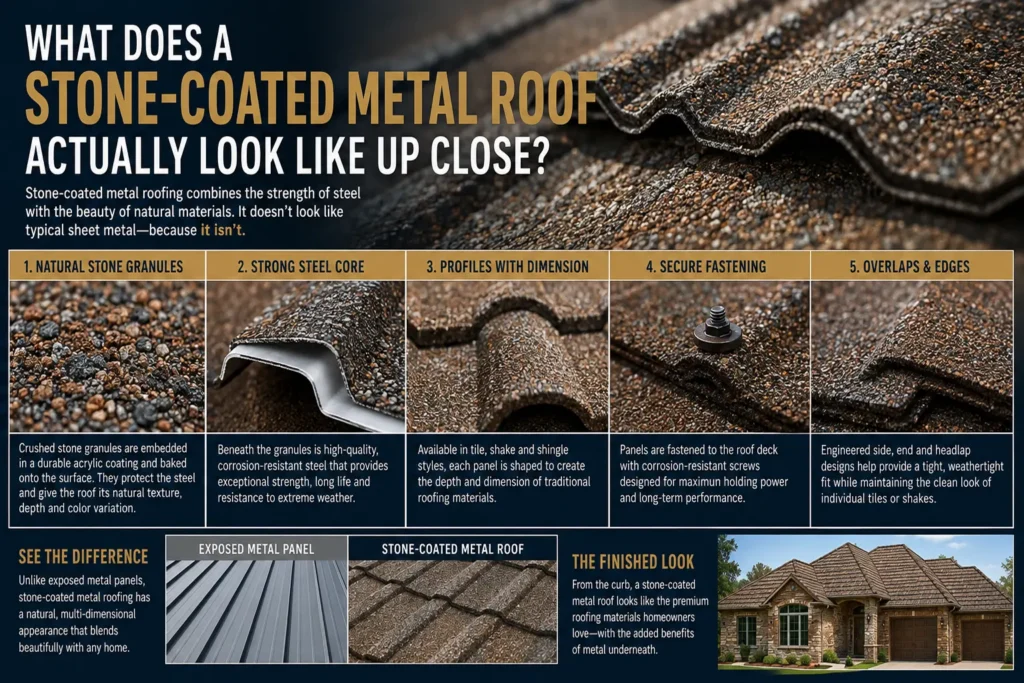
What Does a Stone-Coated Metal Roof Actually Look Like Up Close?
When most people hear the words metal roof, they picture large sheets of smooth metal running from the ridge of a roof to the eaves.
That image makes sense. Standing seam and exposed-fastener metal roofing are common, and their metal surfaces are intentionally part of the architectural appearance.
But stone-coated metal roofing is completely different.
Walk up to a DECRA stone-coated metal roofing panel and the first thing you are likely to notice isn’t shiny sheet metal. You’ll see texture, individual stone granules, color variation, shadows, raised edges and dimensional profiles designed to resemble traditional roofing materials.
Underneath all of that texture is steel.
At Premium Roofing Products (PRP), a Florida roofing distributor specializing in stone-coated metal roofing, we frequently introduce homeowners, contractors and builders to roofing materials that look very different up close than they expect.
So let’s zoom in.
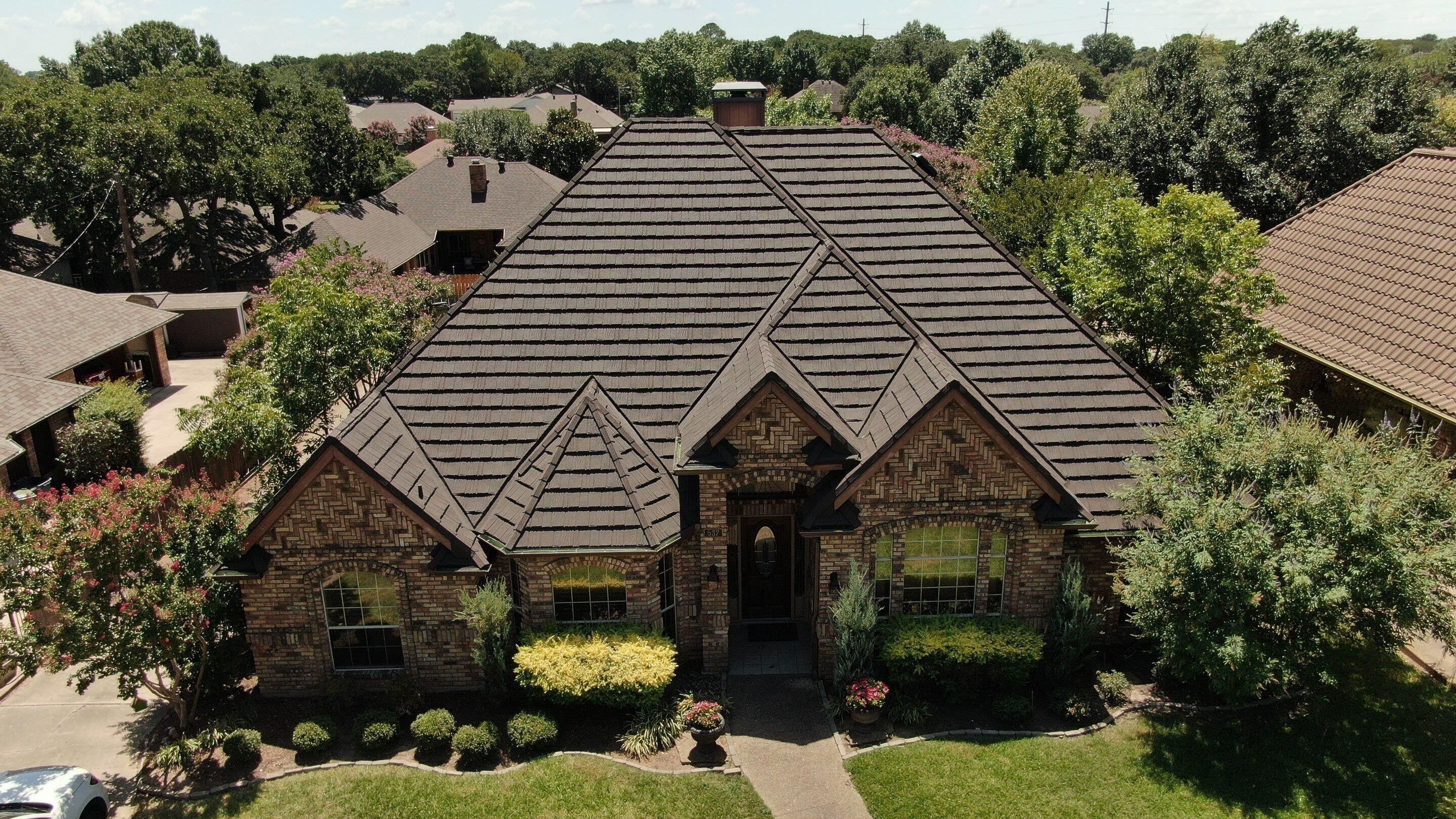
Photo courtesy of DECRA Metal Roofing. Click image to visit DECRA.
Stone-Coated Metal Roofing Doesn’t Look Like Typical Sheet Metal
The difference starts with how the roofing panels are made.
Instead of leaving the steel as a smooth exposed surface, manufacturers such as DECRA form the steel into dimensional roofing profiles and cover the visible surface with natural stone granules.
Those profiles can recreate the appearance of:
- Traditional barrel tile
- Mediterranean tile
- Wood shake
- Dimensional asphalt shingles
- Slate-inspired roofing
The finished roof still has the strength of a steel substrate underneath, but the material you actually see from above is textured stone coating.
The easiest way to think about it:
A conventional metal roof often celebrates the appearance of metal. A stone-coated metal roof uses metal as its structural foundation while creating the visual texture of more traditional roofing materials.
Look #1: The Stone Granules
The most noticeable feature when you examine stone-coated metal roofing up close is the granular surface.
These aren’t simply painted dots or a printed texture.
DECRA explains that its roofing granules are produced from natural stone mined from a quarry. The stone is crushed and screened into different particle sizes before being coated with color pigments.
Those pigments are baked onto the stone through a ceramic coloring process.
The finished blend combines different granule sizes and colors to create the surface texture you see on the roof.
Instead of looking perfectly uniform like a painted sheet of metal, individual granules create subtle differences in texture and color.
That variation becomes especially noticeable when sunlight moves across the roof.
What You’re Seeing Up Close
- Natural stone particles
- Different granule sizes
- Multiple color tones
- A textured rather than smooth surface
- Granules embedded into the panel’s acrylic base coat
Look #2: There’s Steel Underneath the Stone
The surface may look like traditional roofing material, but the structural foundation is steel.
DECRA begins its manufacturing process with structural-quality steel sheets. The steel is formed and stamped into the shape of the particular roofing profile.
That steel base is protected by an aluminum-zinc alloy coating and additional coating layers before the stone surface is applied.
DECRA’s manufacturing process then includes an acrylic base coat, stone granules, a protective overglaze and final curing.
If you were able to examine the edge of an unfinished panel, the steel substrate would be obvious.
Once installed on a house, however, the steel is largely hidden by the panel shape, coating and roofing system.
Look #3: The Panels Are Stamped Into Real Shapes
Stone coating alone would not make a flat sheet of steel look like dimensional tile or shake.
The shape of the panel is equally important.
DECRA steel sheets are stamped and formed into different profiles before the stone-coating process is completed.
That creates actual peaks, valleys, curves, thick-looking edges and shadow lines.
The depth isn’t simply printed onto the surface.
It is physically formed into the steel panel.
Stone-Coated Metal Tile Up Close
Tile profiles provide one of the clearest examples.
A conventional steel sheet may have ribs or seams, but a tile-style stone-coated panel can have pronounced curves designed to reproduce Mediterranean and Spanish roofing forms.
DECRA currently offers two different tile interpretations: DECRA Tile and DECRA Villa Tile.
DECRA Villa Tile creates the substantial barrel-style appearance commonly associated with Spanish and Mediterranean architecture.
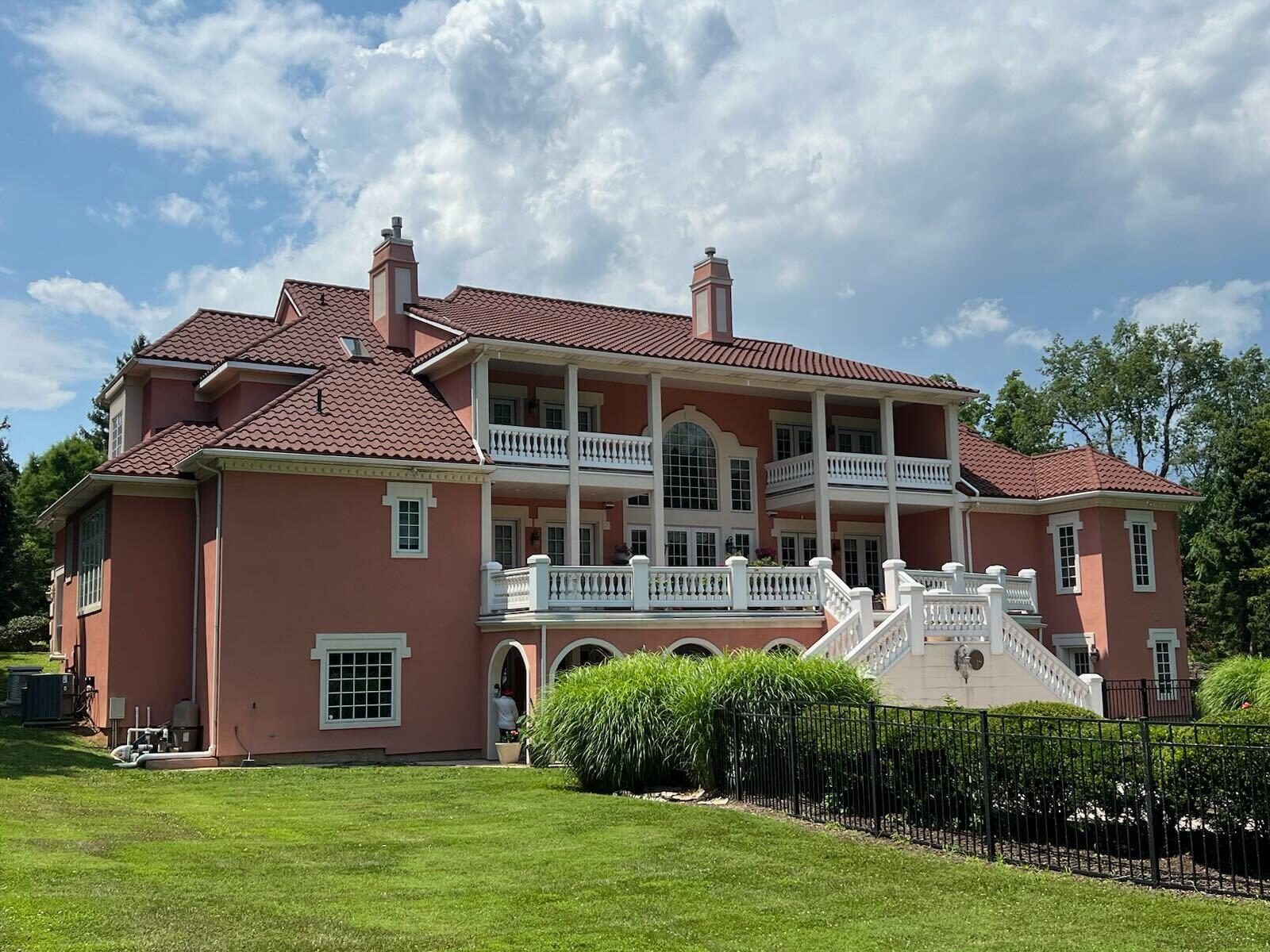
Photo courtesy of DECRA Metal Roofing. Click image to visit DECRA.
Look #4: The Shadows Help Create the Illusion
Roofing appearance isn’t created by color alone.
Shadow is extremely important.
When sunlight hits the raised and recessed areas of a stone-coated metal panel, those physical shapes create natural shadows.
This is one reason a dimensional stone-coated roof can look substantially different from a flat metal panel from the street.
The curves of a tile profile, deep edges of a shake profile or thick-looking tabs of a shingle profile all interact with sunlight differently.
As the sun changes throughout the day, the roof can appear slightly different as well.
Stone-Coated Shake Up Close
Wood shake is known for irregular texture, depth and pronounced shadow lines.
DECRA Shake and Shake XD use formed steel panels and stone granules to create a similar visual effect.
Instead of exposing smooth metal, the surface has a coarse granular finish, while the stamped steel creates the shapes and transitions that provide dimension.
Photo courtesy of DECRA Metal Roofing. Click image to visit DECRA.
Look #5: Stone-Coated Metal Shingles Have Thick-Looking Edges
Stone-coated metal isn’t limited to tile and shake architecture.
DECRA Shingle XD is designed specifically to recreate the depth and dimensionality associated with architectural shingles.
From the street, the roof can easily be mistaken for a premium dimensional shingle roof.
Closer inspection reveals something different.
The individual-looking shingle shapes are actually part of engineered steel roofing panels.
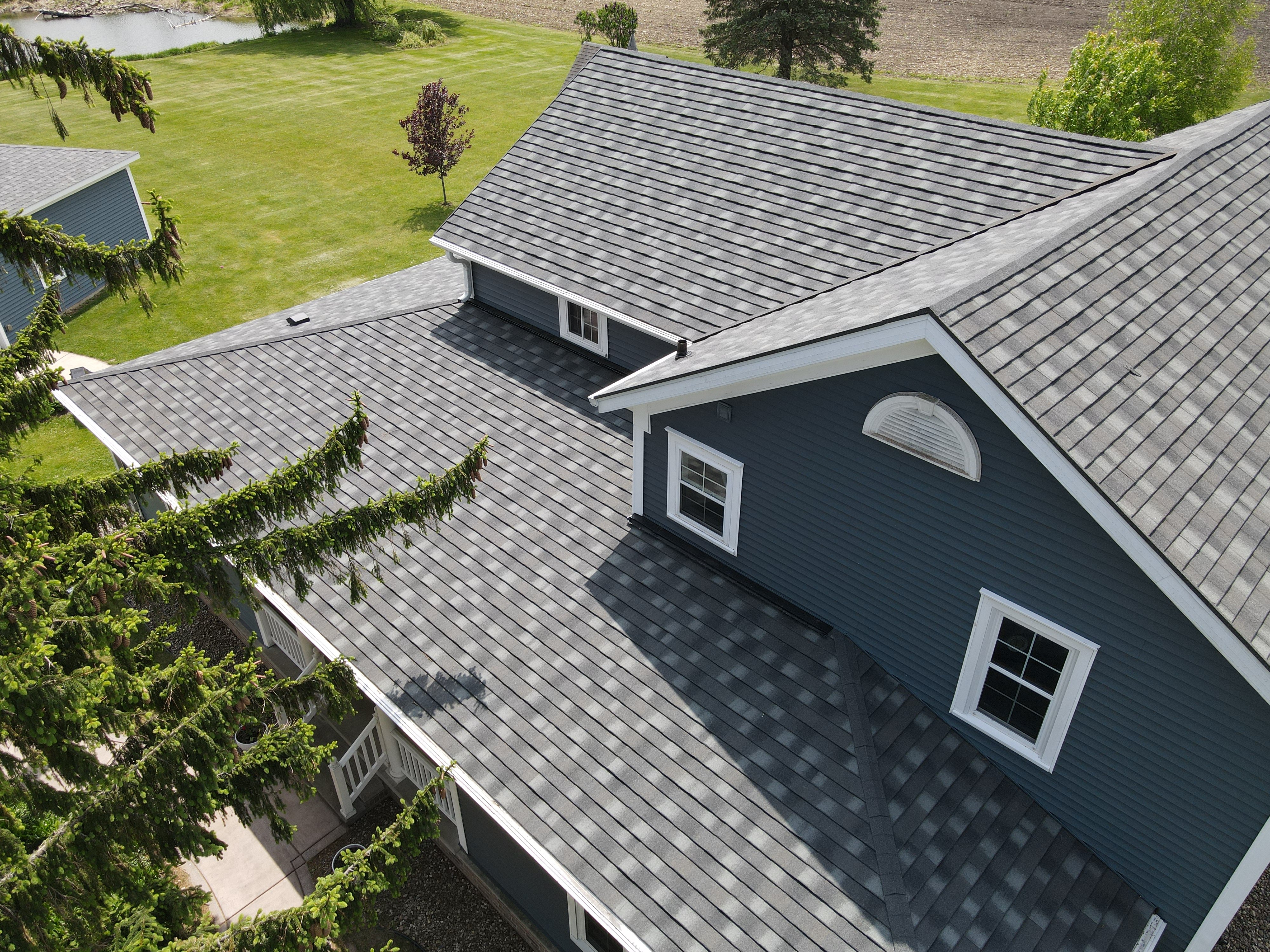
Photo courtesy of DECRA Metal Roofing. Click image to visit DECRA.
Look #6: The Panels Overlap and Interlock
One of the most interesting things to examine on an installed stone-coated metal roof is where one panel meets another.
Individual DECRA panels are engineered to work together as a roofing system.
Panels overlap and interlock so that the finished roof reads visually as rows of tile, shake or shingles rather than obvious rectangular sheets of steel.
When the roof is properly installed, the joints become part of the pattern.
From normal viewing distances, many homeowners would never guess where one large steel panel ends and the next begins.
Look closely:
What appears to be dozens of individual pieces of shake, tile or shingle may actually be a system of larger engineered steel panels that overlap and interlock.
Look #7: What About the Fasteners?
This is another major difference between stone-coated metal roofing and the exposed-fastener metal roofing many people picture.
Fastening methods vary depending on the particular DECRA profile and installation system.
DECRA identifies Villa Tile, Shingle XD and Shake XD as direct-to-deck profiles using hidden fasteners.
Other profiles, including DECRA Tile and DECRA Shake, use batten-based installation systems.
The important point is that you shouldn’t assume a stone-coated metal roof will have rows of exposed screws across the visible surface simply because it is made from metal.
The attachment method is engineered around the specific roofing profile.
What Does a Cut Edge Look Like?
A cut panel provides one of the easiest ways to understand what stone-coated metal roofing actually is.
Looking at the edge reveals that the dimensional roofing surface is formed from steel rather than solid clay, concrete or wood.
The steel can be relatively thin compared with the apparent depth of the finished roofing profile.
That contrast is part of what makes stone-coated steel visually interesting.
The roof can create substantial-looking curves and shadow lines without requiring a solid block of material underneath each ridge.
Stone-Coated Metal vs. Traditional Exposed Metal
| Feature | Stone-Coated Metal | Typical Exposed Metal Roofing |
|---|---|---|
| Visible Surface | Natural stone granules | Painted or coated metal |
| Texture | Granular and highly textured | Generally smoother |
| Typical Appearance | Tile, shake or shingles | Standing seam, corrugated or ribbed panels |
| Panel Shape | Stamped into dimensional roofing profiles | Often long continuous panels |
| Color Appearance | Blended granule colors | Usually painted or coated surface colors |
| Visual Goal | Traditional residential roofing appearance | Architectural metal appearance |
Both Are Real Metal Roofs
It is important not to interpret this comparison as saying one type of metal roofing is more authentic than another.
Standing seam, exposed-fastener panels and stone-coated steel are all legitimate forms of metal roofing.
They simply use metal differently from a design standpoint.
A standing seam roof intentionally displays clean metal panels and pronounced vertical seams.
Stone-coated metal roofing intentionally disguises much of that industrial appearance by adding texture and forming the steel into traditional roofing profiles.
The Difference Is Even More Obvious From the Street
Up-close inspection explains how the material is made.
But the real purpose of the texture, colors and dimensional profiles becomes apparent when you step away from the house.
At normal viewing distances, the individual granules visually blend together.
Instead of seeing hundreds of tiny stones, your eye sees larger areas of brown, charcoal, gray, clay or blended colors.
Likewise, the individual steel panels visually disappear into repeating rows of roofing.
You notice the overall roof—not the steel panel beneath it.
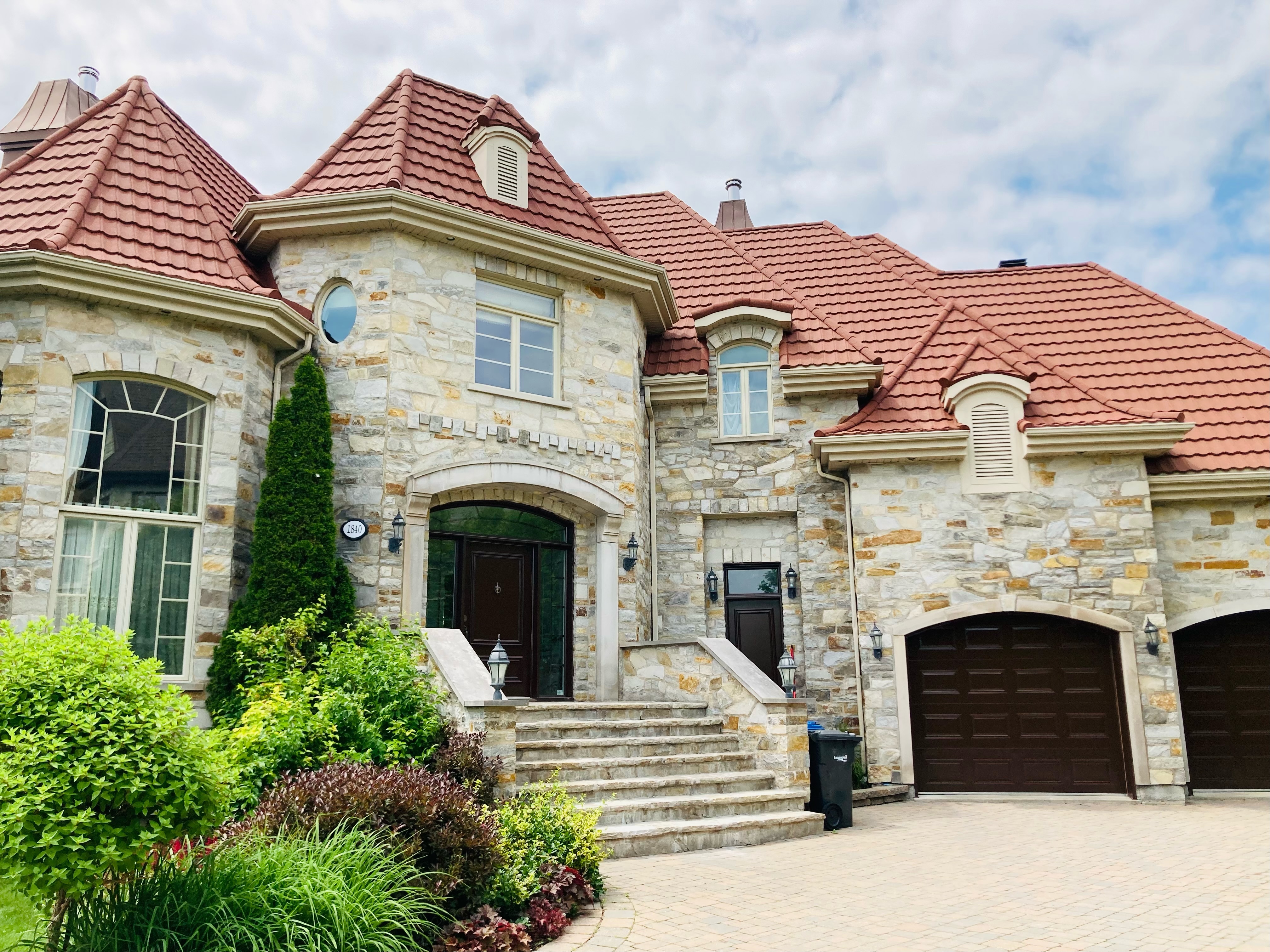
Photo courtesy of DECRA Metal Roofing. Click image to visit DECRA.
Why Don’t Stone-Coated Roofs Look Shiny?
Another misconception about metal roofing is that every metal roof must have a shiny or reflective appearance.
Stone-coated steel is different because the visible surface is predominantly the granular coating rather than bare metal.
The irregular surface scatters light differently than a smooth painted panel.
That helps produce the softer, textured appearance associated with traditional roofing materials.
Where Does the Color Come From?
The colors aren’t created solely by painting the steel.
DECRA’s roofing granules are themselves color-coated.
According to DECRA, natural stone is crushed and screened before pigments are applied to the granules and baked at high temperatures.
Different granule colors can then be blended together.
That means a roof labeled “brown,” “charcoal” or “terracotta” can actually contain multiple subtle tones when examined closely.
Those colors blend visually when viewed from farther away.
Why Does the Same Roof Look Different in Sunlight and Shade?
Stone-coated roofing has a three-dimensional surface.
That means direct sunlight, cloud cover, shade and the angle of the sun can change how the roof appears throughout the day.
Several things are happening simultaneously:
- Individual granule colors react differently to light.
- Raised panel areas receive more direct light.
- Recessed areas create deeper shadows.
- Roof pitch changes the angle at which sunlight reaches the surface.
- Surrounding siding, stucco and landscaping influence how we perceive the roof color.
This is one reason looking at physical roofing samples is so important before making a final color decision.
Is Some Granule Loss Normal?
If you’ve handled a stone-coated roofing sample, you may occasionally notice a small number of loose granules.
DECRA addresses this directly in its homeowner guidance.
During manufacturing, the granules are embedded into the acrylic base coat and loose material is removed before curing. However, some loose granules can remain, and minor granule shedding can occur during installation, walking on the roof or normal weather exposure.
DECRA states that minor granule loss is normal and is not, by itself, a cause for concern.
Important:
If a roof appears damaged or experiences unusual material loss, homeowners should contact a qualified roofing professional rather than using this general information to diagnose the roof themselves.
Can You See the Metal From the Ground?
Usually, what catches your eye from the ground is the finished roofing profile rather than the underlying steel.
The stone coating, overlaps, accessory pieces and installation details are designed to create a finished roofing system.
Edges, hips, ridges and transitions use compatible roofing components so the overall appearance remains consistent.
That is a major reason stone-coated metal can work on homes where a traditional residential appearance is important.
One Material, Very Different Architectural Styles
One of the most interesting things about stone-coated steel is how different the exact same underlying material can look depending on how the panel is formed.
Consider these examples:
Villa Tile
Deep barrel shapes create the visual character associated with Spanish and Mediterranean tile.
Shake
Irregular dimension and stone texture reproduce the warmer character associated with wood shake.
What Should You Look at When Examining a Sample?
If you’re comparing stone-coated metal roofing in person, don’t simply look at the overall color.
Pick up the panel and examine it.
-
Look at the granules.
Notice the different sizes, colors and surface texture. -
Look at the edge.
You can see how the steel panel is formed beneath the coating. -
Look at the profile from the side.
This reveals how much physical dimension has been stamped into the steel. -
Look at the shadows.
Tilt the sample toward and away from the light. -
Step back.
Notice how the individual granules begin blending into a unified roof color. -
Compare profiles.
Tile, shake and shingle products can look dramatically different despite sharing the same basic stone-coated steel concept.
Don’t Choose Stone-Coated Roofing From a Computer Screen Alone
Photography is excellent for understanding how different profiles look on completed homes.
But photographs can’t completely reproduce the texture of stone granules or the depth of stamped steel.
Digital displays can also change how colors appear.
DECRA itself recommends viewing actual roofing samples when making final product and color decisions.
That is especially important in Florida, where intense sunlight can reveal different highlights and shadows than you may see in an indoor showroom or online image.
See Stone-Coated Metal Roofing Up Close at Premium Roofing Products
Premium Roofing Products (PRP) is a Florida roofing distributor specializing in stone-coated metal roofing and premium roofing systems.
PRP is an authorized DECRA distributor and supplies roofing materials for residential, commercial and HOA projects throughout Florida.
Our team can help homeowners, contractors, builders and roofing professionals compare different profiles, textures, colors and product samples.
Seeing these products online is a good first step.
Seeing and handling an actual stone-coated metal roofing sample is even better.
Want to See What Stone-Coated Metal Roofing Really Looks Like?
Compare DECRA Tile, Villa Tile, Shake, Shake XD and Shingle XD profiles through Premium Roofing Products and see the stone texture, panel shape and color blends for yourself.
The Strength of Metal Doesn’t Have to Look Industrial
That may be the biggest takeaway when examining stone-coated metal roofing up close.
Underneath the surface is engineered steel.
On top are natural stone granules, blended colors and physical profiles that can recreate traditional tile, shake and shingle architecture.
Up close, you see the individual granules, formed edges, overlaps and engineering.
Step back, and all of those small details visually merge into something completely different:
A finished residential roof that often doesn’t look like metal at all.
Photo Credit:
Roofing photographs featured in this article are hosted by and courtesy of DECRA Roofing Systems. Clicking a DECRA photograph will open a DECRA resource in a new browser tab.
Sources & Additional Resources:
DECRA – What Is Stone-Coated Metal Roofing?
|
DECRA – Roofing Granules: Features and Benefits
|
DECRA – How Is DECRA Metal Roofing Made?
|
|