

 HOME
HOME Services
 Residential
 Commercial
 Products
 ABOUT
ABOUT Resources
 Contact
 813-777-8272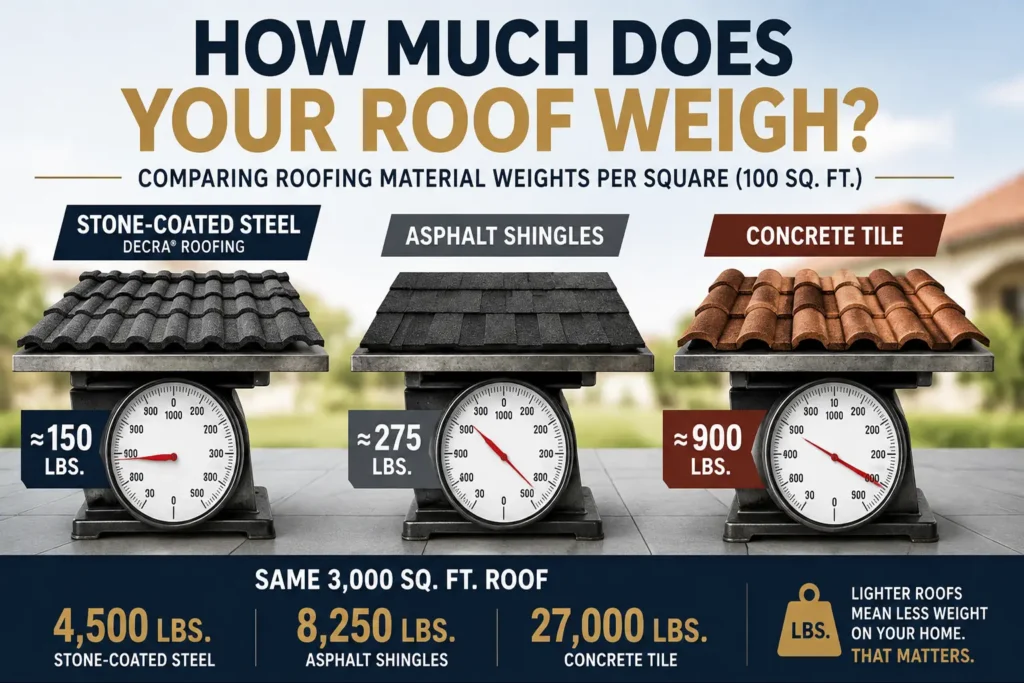
How Much Does Your Roof Weigh? Tile vs. Shingles vs. Stone-Coated Metal
When homeowners compare roofing materials, they usually start with appearance, durability, color and price.
But there is another major difference sitting directly over your head:
weight.
Roofing materials can vary dramatically in weight. A roofing material that looks like traditional tile may weigh a fraction of what conventional concrete tile weighs.
That makes roof weight an especially interesting consideration when comparing concrete tile, asphalt shingles and stone-coated metal roofing.
At Premium Roofing Products (PRP), a Florida roofing distributor specializing in premium metal and stone-coated metal roofing products, we help contractors and homeowners compare roofing systems from manufacturers including DECRA.
Let’s put some actual numbers behind the question: How much does a roof really weigh?
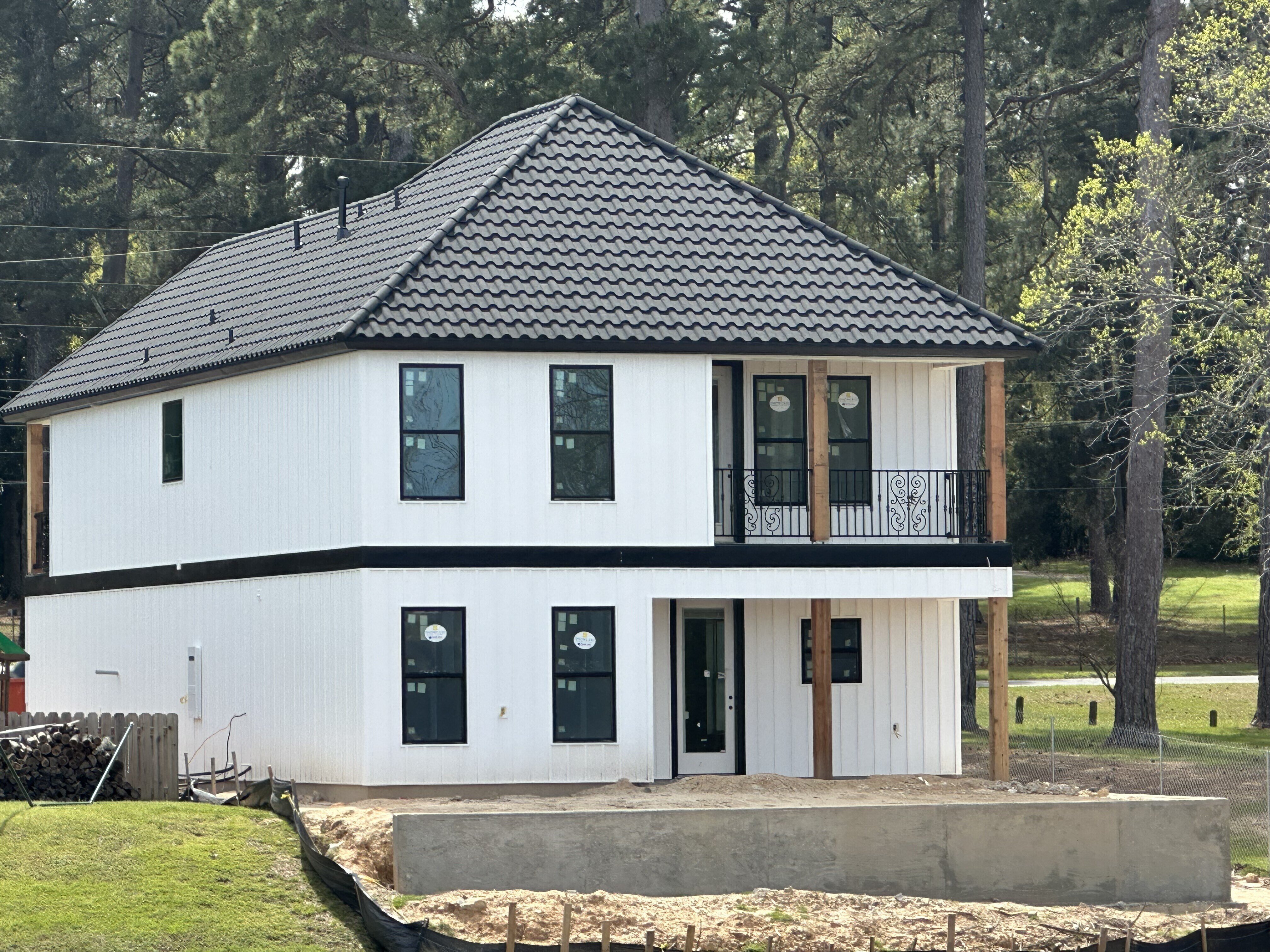
Photo courtesy of DECRA Metal Roofing. Click image to visit DECRA.
First: What Is a Roofing Square?
Roofers don’t normally discuss roofing material by simply saying how much one tile, panel or shingle weighs.
Instead, roofing is commonly measured in squares.
A roofing square is the amount of roofing needed to cover approximately 100 square feet of roof area.
So when a manufacturer lists a product as weighing 150 pounds per square, that means approximately 150 pounds of that roofing product is installed across 100 square feet of roof area.
This makes it much easier to compare different roofing materials.
Tile vs. Shingles vs. Stone-Coated Metal: The Weight Difference
Here’s where the comparison becomes interesting.
Product weights vary by manufacturer, profile and installation, but representative material weights show just how large the difference can be.
Approximate Roofing Material Weight Per Square
One roofing square = 100 square feet.
Approximate comparison for illustration. Actual installed material weight varies by manufacturer, product, profile and roofing system. DECRA profiles are generally approximately 150–160 lbs. per square. Asphalt shingle products commonly vary around 200–350 lbs. per square. Eagle Roofing lists Florida concrete tile examples from approximately 770 to 880 lbs. per square, while several standard-weight profiles are approximately 900–970 lbs. per square.
How Much Does Stone-Coated Metal Roofing Weigh?
DECRA stone-coated steel provides one of the most interesting examples of how appearance and material weight don’t necessarily go together.
A DECRA roof can recreate the dimensional appearance of Mediterranean tile, wood shake or dimensional shingles while remaining relatively lightweight.
According to DECRA product specifications, several DECRA profiles have an installed field-panel weight of approximately 150 pounds per roofing square.
PRP’s published specifications list:
| DECRA Product | Approx. Installed Weight / 100 sq. ft. |
|---|---|
| DECRA Tile | 150 lbs. |
| DECRA Shake | 150 lbs. |
| DECRA Shake XD | 150 lbs. |
| DECRA Shingle XD | 150 lbs. |
| DECRA Villa Tile | 160 lbs. |
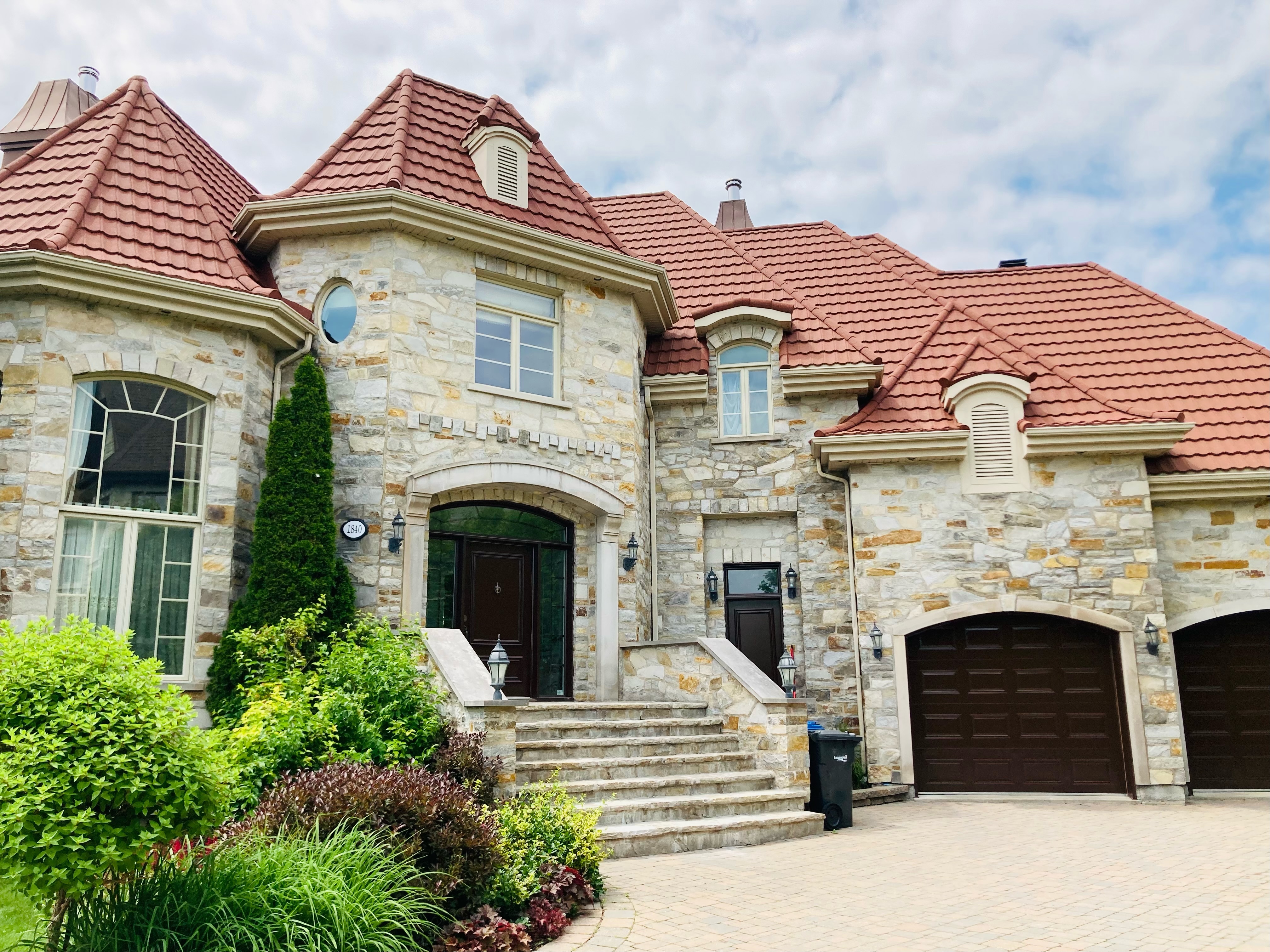
Photo courtesy of DECRA Metal Roofing. Click image to visit DECRA.
How Much Does Concrete Roof Tile Weigh?
Traditional concrete tile is in a completely different weight category.
As one real-world manufacturer example, Eagle Roofing Products publishes technical specifications for its concrete roof tile.
Its current specifications list several standard profiles around 900 to 970 pounds per 100 square feet. For Florida specifically, Eagle lists examples such as Malibu at approximately 770 pounds per square and Capistrano at approximately 880 pounds per square.
Some tile configurations can weigh even more.
This doesn’t mean heavy roofing is inherently bad. Concrete tile manufacturers design their products around the properties and advantages of concrete.
It does mean, however, that there can be a substantial difference in dead load between traditional concrete tile and a lightweight stone-coated steel product.
How Much Do Asphalt Shingles Weigh?
Asphalt shingles generally sit between stone-coated steel and concrete tile in our comparison.
The exact number depends heavily on whether the roof uses basic three-tab shingles, dimensional architectural shingles or heavier designer products.
A useful general range for residential asphalt shingles is approximately 200 to 350 pounds per roofing square, although individual products can fall outside that range.
That means stone-coated steel can actually weigh less than many asphalt shingle products despite producing a much more dimensional tile, shake or shingle appearance.
Put That Difference Across an Entire Roof
The per-square numbers become much easier to understand when we apply them to an entire house.
Imagine a roof with 30 squares of roof area.
That’s approximately 3,000 square feet of roofing surface.
| Roofing Material | Representative Weight / Square | Approx. Material Weight on 30 Squares |
|---|---|---|
| DECRA Stone-Coated Steel | 150 lbs. | 4,500 lbs. |
| Asphalt Shingles | 275 lbs.* | 8,250 lbs. |
| Concrete Tile | 900 lbs.* | 27,000 lbs. |
*275 lbs. for asphalt and 900 lbs. for concrete tile are representative examples used to illustrate the scale of the difference. Actual product weights must always be checked with the manufacturer.
Think about that for a moment:
Using these representative numbers, the difference between 30 squares of 150-lb. stone-coated steel and 30 squares of 900-lb. concrete tile is approximately 22,500 pounds of roofing material.
That’s more than 11 tons of difference in the roof covering itself.
Why Does Roof Weight Matter?
A roof’s framing carries permanent loads from the roofing system along with other loads the structure was designed to handle.
In engineering terms, the permanent weight of building components is generally referred to as dead load.
The roofing material is only one component of that load, but changing roofing materials can substantially change how much weight is being placed on the structure.
This is one reason roofing material should never be selected based solely on appearance.
Can You Replace Shingles With Concrete Tile?
Possibly, but moving from a relatively lightweight roofing product to a significantly heavier one may require additional evaluation.
The existing structure, roof framing, decking, local building requirements and proposed roofing system all need to be considered.
A qualified roofing contractor and, when appropriate, a structural professional should determine whether a particular roofing system is suitable for the structure.
Never assume that because a roof can support one material it can automatically support every other roofing material.
What Makes Stone-Coated Metal Different?
Stone-coated metal roofing is not simply a painted sheet of steel.
DECRA describes its panels as being formed from corrosion-resistant aluminum-zinc alloy-coated steel and finished with protective coatings and ceramic-coated stone granules.
The result is a roofing material capable of producing the texture and dimension associated with more traditional roofing styles.

Image courtesy of DECRA Metal Roofing. Click to learn more from DECRA.
Lightweight Doesn’t Mean Flat or Industrial Looking
This is where stone-coated metal roofing becomes especially interesting for residential architecture.
When homeowners hear “lightweight metal roof,” they may immediately picture long sheets of exposed metal.
Stone-coated steel can look completely different.
DECRA offers profiles designed to recreate several traditional roofing styles:
- DECRA Villa Tile – barrel-style Old-World tile appearance
- DECRA Tile – scalloped Mediterranean tile appearance
- DECRA Shake – dimensional wood shake appearance
- DECRA Shake XD – deeply dimensional shake appearance
- DECRA Shingle XD – dimensional traditional shingle appearance
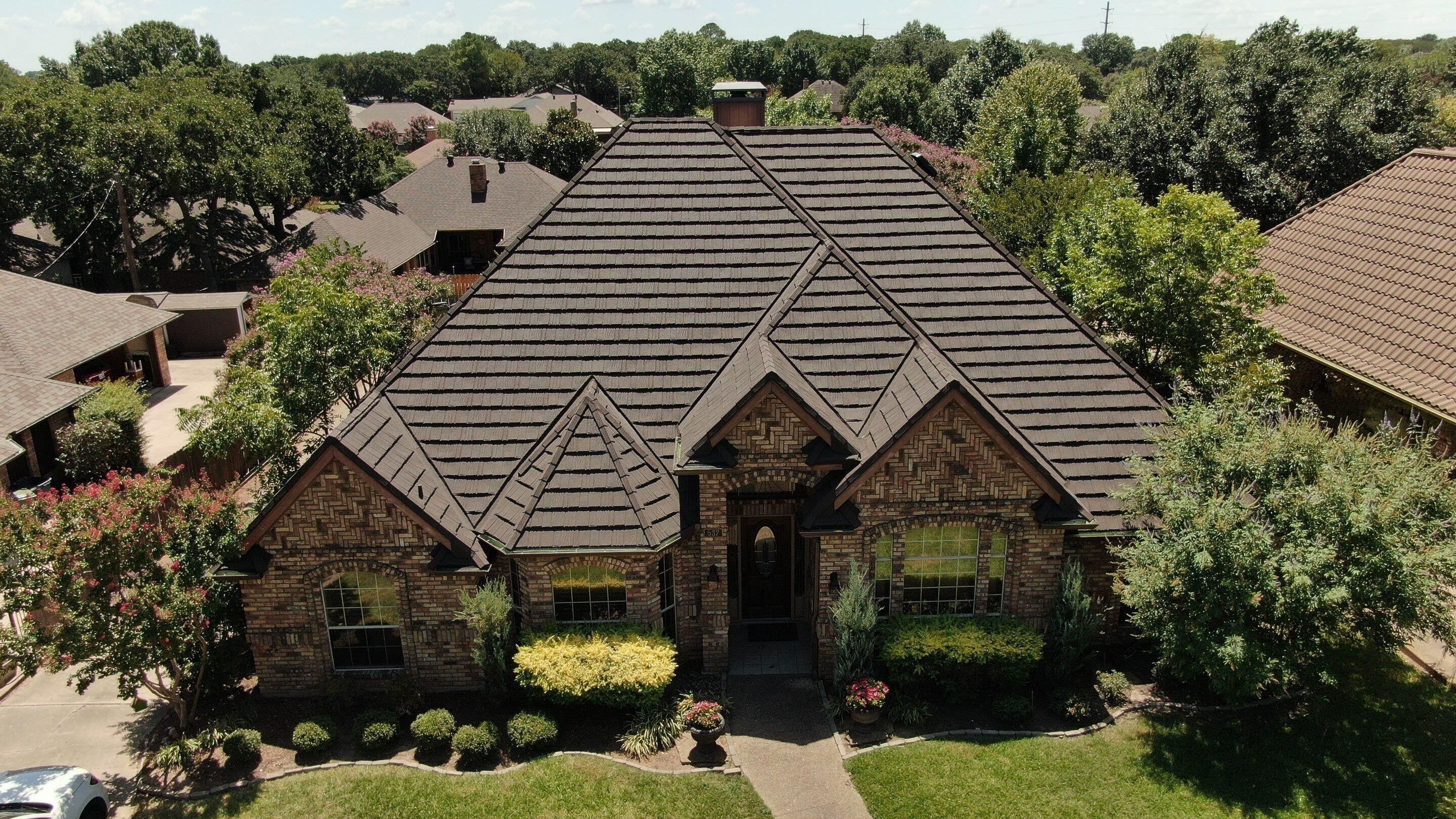
Photo courtesy of DECRA Metal Roofing. Click image to visit DECRA.
Does a Lighter Roof Mean a Weaker Roof?
No. Material weight by itself is not a measure of roofing performance.
Different roofing materials achieve their strength and performance characteristics in different ways.
For example, DECRA’s stone-coated steel systems undergo physical-property testing involving wind, fire and other building-code requirements.
Likewise, concrete tile has its own material properties and advantages. The fact that concrete tile is heavier doesn’t make it a poor roofing material, just as the lighter weight of stone-coated steel doesn’t make it inherently better for every application.
Weight is simply one important characteristic to consider when comparing roofing systems.
Don’t Forget the Rest of the Roofing System
There’s another important distinction when discussing roofing weight.
The figures in this article primarily compare roof covering material.
A completed roof may also contain:
- Roof decking
- Underlayment
- Battens where required
- Fasteners
- Flashing
- Valleys
- Ridge and hip components
- Ventilation components
- Other accessories
Therefore, the actual dead load of a completed roofing assembly is not simply the field-panel weight shown on a product specification sheet.
Product weight is useful for comparing roofing materials, but actual structural calculations should be based on the complete proposed roofing assembly and project-specific conditions.
Roof Weight Can Also Matter During Tear-Off
There’s another place where those pounds become noticeable: removing the old roof.
Tearing off thousands of pounds of existing roofing means that material needs to be removed from the roof, lowered safely, loaded, transported and disposed of.
On larger projects, the difference between a few thousand pounds and tens of thousands of pounds of roofing material can become substantial from a handling and logistics standpoint.
Stone-Coated Steel vs. Concrete Tile: Similar Look, Very Different Weight
This is perhaps the most visually interesting comparison.
DECRA Villa Tile and DECRA Tile are designed to provide the dimensional appearance associated with traditional tile roofing.
Yet PRP’s product specifications list DECRA Tile at approximately 150 pounds per square and Villa Tile at approximately 160 pounds per square.
By comparison, Florida concrete tile examples from Eagle Roofing Products can weigh approximately 770 to 880 pounds per square, with other standard-weight profiles reaching approximately 900 to 970 pounds per square.
In other words, two roofs can provide a similar Mediterranean or tile-inspired architectural appearance while having dramatically different roof-covering weights.
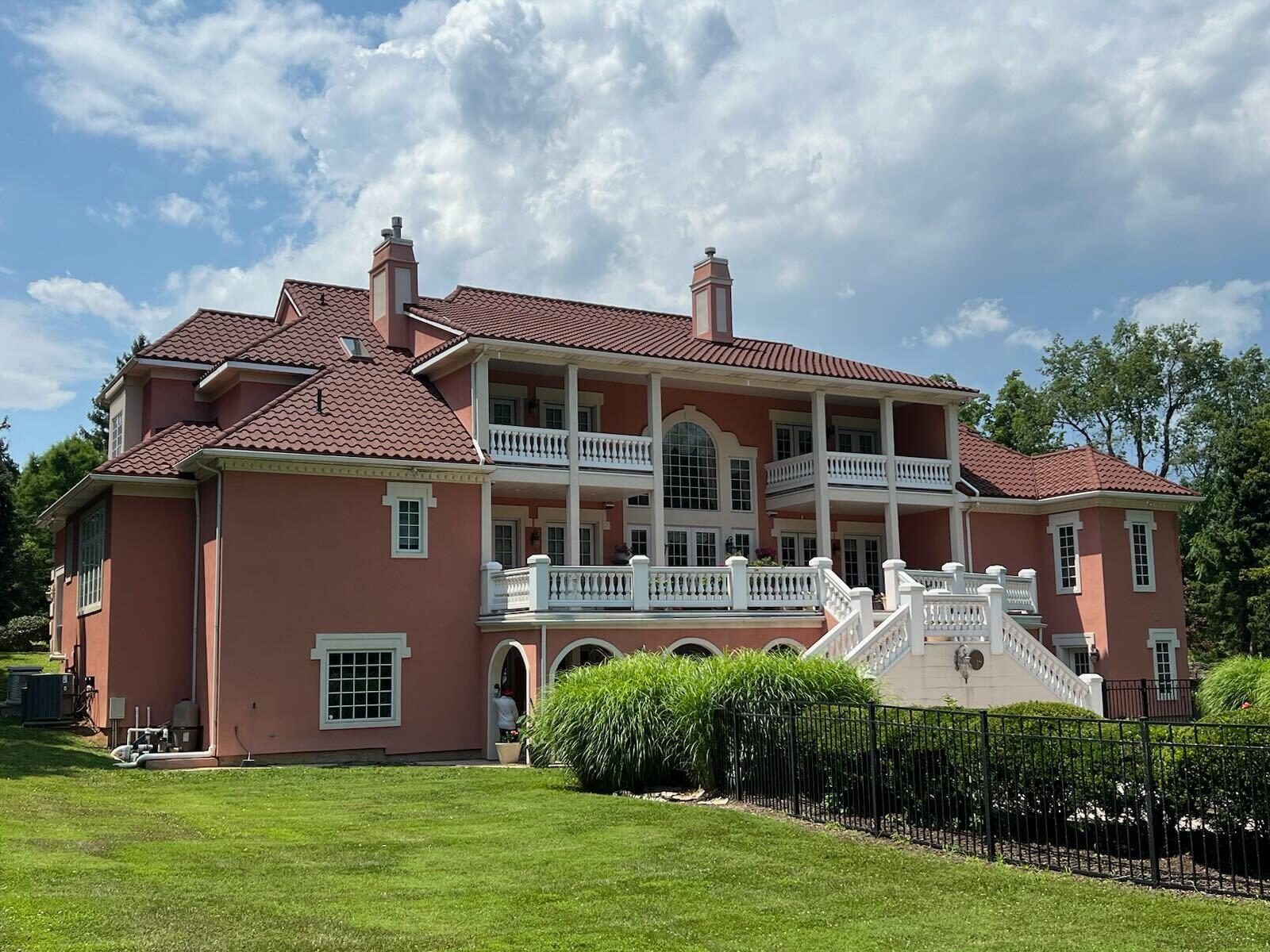
Photo courtesy of DECRA Metal Roofing. Click image to visit DECRA.
So, How Much Does Your Roof Weigh?
It depends on the roofing material, product profile, size of the roof and complete roofing assembly.
But comparing the roof covering alone demonstrates just how dramatically materials can differ.
| Roof Material | Approximate Material Weight Per 100 sq. ft. |
|---|---|
| DECRA Stone-Coated Steel | 150–160 lbs. |
| Typical Asphalt Shingles | ~200–350 lbs. |
| Florida Concrete Tile Examples | ~770–880 lbs. |
| Some Standard Concrete Tile Profiles | ~900–970+ lbs. |
That’s why roofing weight deserves a place alongside appearance, durability, installation requirements, weather performance and price when comparing roofing materials.
Compare Stone-Coated Metal Roofing With Premium Roofing Products
Premium Roofing Products (PRP) is a Florida roofing distributor specializing in stone-coated metal roofing and other premium roofing products.
PRP supplies roofing materials to contractors, homeowners, commercial properties, residential projects and HOA communities throughout Florida.
Our product selection includes leading stone-coated metal roofing manufacturers such as DECRA, along with additional premium metal roofing options.
If you’re comparing conventional tile, shingles and stone-coated metal, our team can help you understand available profiles, colors, product specifications and material options.
Want to See How Lightweight Stone-Coated Metal Roofing Can Look Like Traditional Tile, Shake or Shingles?
Explore the DECRA product line available through Premium Roofing Products or contact PRP to compare roofing profiles and product samples for your next Florida roofing project.
Important Note:
All roofing weights are approximate and are provided for general educational comparison only. Actual weights vary by manufacturer, profile, accessories, underlayment and installation method. Product specifications should be confirmed with the manufacturer before material selection. Structural suitability should be determined by qualified professionals where required.
Sources:
|
DECRA Tile & Shake Installation Specifications
|
Eagle Roofing Products Technical Specifications
|